
Doctor Martyn Lloyd Jones was an extraordinary preacher…but I’ve always found him hard to listen to. Maybe it was his voice. Still, if you just read his sermons (even if it’s in his voice), they’re quite good.
Long ago, I picked up his book, Studies in the Sermon on the Mount, and loved it. I recall reading and highlighting along the way, then going back and just extracting the highlights and it made for an excellent Bible study.
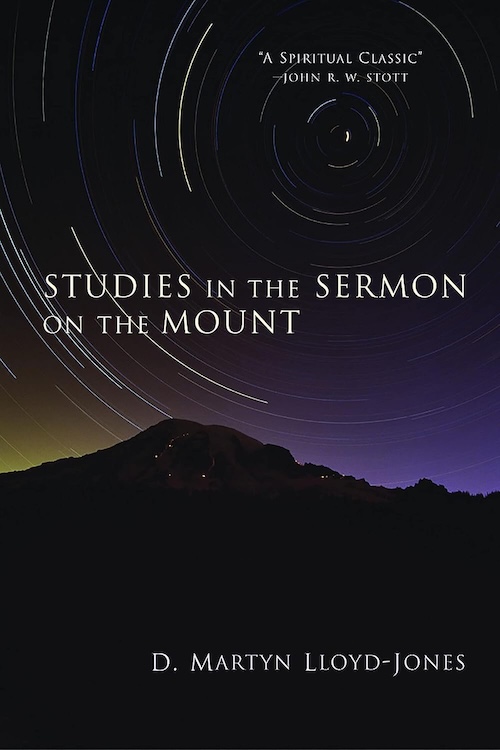
The Doctor’s approach is so strong — from the very introduction of the book. In speaking of how one can come to the wrong conclusions when reading the Bible mechanically, he says:
“There can be no doubt at all that the commonest cause of all this is our tendency so often to approach the Bible with a theory. We go to our Bibles with this theory and everything we read is controlled by it. Now we are all quite familiar with that. There is a sense in which it is true to say that you can prove anything you like from the Bible.That is how heresies have arisen. The heretics were never dishonest men; they were mistaken men. They should not be thought of as men who were deliberately setting out to go wrong and to teach something that is wrong; they have been some of the most sincere men that the Church has ever known. What was the matter with them? Their trouble was this: they evolved a theory and they were rather pleased with it; then they went back with this theory to the Bible, and they seemed to find it everywhere. If you read half a verse and emphasize over-much some other half verse elsewhere, your theory is soon proved. Now obviously this is something of which we have to be very wary. There is nothing so dangerous as to come to the Bible with a theory, with preconceived ideas, with some pet idea of our own, because the moment we do so, we shall be tempted to over-emphasize one aspect and under-emphasize another.” (page 7)
The Doctor goes to heretics, but really, he talks to us. Yet more than likely we aren’t so theologically sophisticated as to develop theories on the deepest things of God (perhaps those things from which the heresies he speaks emerge); our “theories” are simply the pet verses we use to justify our pet sins. Matthew 7:1 always come to mind here — “Judge not, that you not be judged.” It’s usually trundled out when someone is called out for their rebellion against God (and usually by someone who denies God’s existence from the start). They say, “The Bible says you can’t judge me,” and they forget all of the other things about language and context that matter. Like the very next verse that warns the judger that he will be judged by the same measure (a Christian should certainly know to keep his own house in order). And just a few verses later where Jesus says “Do not give dogs what is holy, and do not throw your pearls before pigs….” How is one to do this without using one’s judgement? This isn’t appealing to obscurity — it’s using the entirety of scripture to inform any one verse.
Now, many times in the past I’ve written to be careful in knowing that one does not earn one’s way into heaven by “doing the right things.” Especially in judging anyone’s actions (to include one’s own). Heaven is not ours but through Christ.
But what the Doctor says here is something to which we all (not just the “theologians”) must pay attention — to include those with even the best of intentions. We all have our biases and blind spots, and we’re all definitely tempted to fudge in our own favor. Spread out over the entirety of the Bible, we’re bound to be wrong somewhere. But what can we do? I think most importantly, we must keep reading. Read the Bible in its entirety. Then read it again. And again. The Doctor warns against reading mechanically for the sake of being able to say we read, and this is true. But if we read with any kind of openness to God’s Spirit, we cannot help but be affected. That Spirit works in our lives, especially if we stay grounded in the entirety of God’s word — a word filled with wisdom that can inform how we live.
So when we go back to Matthew 7:1, we recall Romans 12:18: “If possible, so far as it depends on you, live peaceably with all.” Not as an item on a checklist, but simply a way of living that grows from the salvation we have been given (not earned); and it informs Matthew 7:1 because it teaches us that our “judgment” must be applied in a love for others that is filtered through our role in bringing peace to a relationship.
The Bible is as much the interconnectedness of its verses as it is the verses themselves. Some of that is difficult to grasp and still puzzles a lot of people. But we have to remember to come to the word open to the Spirit’s guidance, and not our own. The Doctor threw this into an introduction to a book about the Sermon on the Mount, but makes a solid point that stands on its own as we continue to live our lives as Christians in a world that is all too willing to twist God’s word for its own purposes.